The Facebook Post That Started Everything
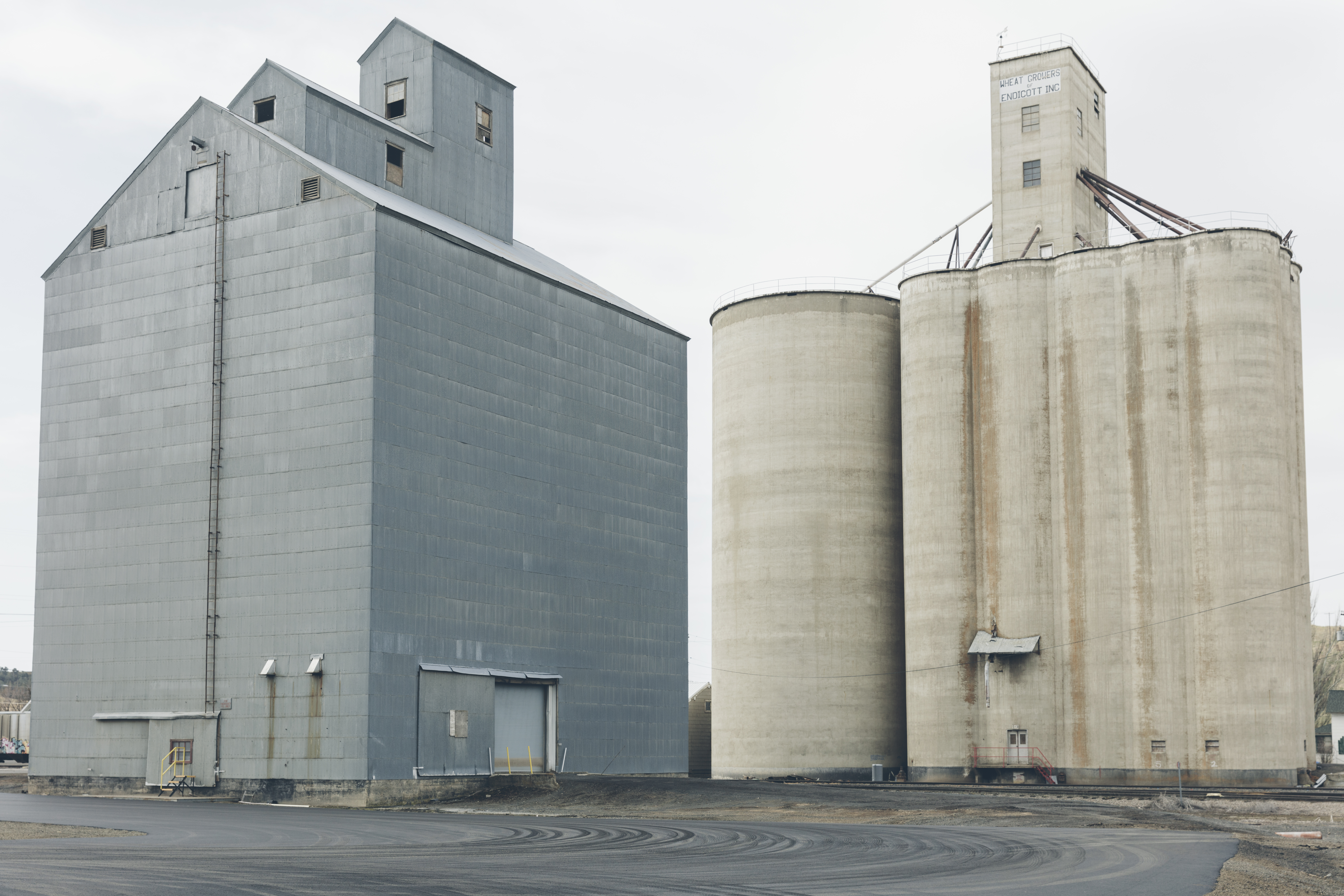
In the fall of 2024, a buddy of mine in Saskatchewan posted on Facebook. It was not a political rant. It was not a meme. It was a photo of a line of trucks outside a grain elevator, with a caption that went something like: "Three hours in line. Again. This is insane."
At the time, I was working in on-farm technology adoption, helping farmers put precision agriculture tools to work. Sensors. Robotics. Data platforms. The future of farming.
And here was my friend, in 2024, waiting in a truck line like it was 1985.
That post stuck with me. Not because long wait times at grain elevators were news to me. I have been in agriculture my entire career. I knew the problem existed. What hit me was the gap between the technology we were funding on the farm and the total absence of technology at the point of delivery.
We had spent billions making farms smarter. Nobody had done the same for the facilities receiving the grain.
GrainFlow did not start from a boardroom whiteboard session. It started from a Facebook post by a farmer who was fed up. That felt like the right reason to build something.
Who Am I and Why Does That Matter?
My name is Bryan Wattie. I am the founder of GrainFlow. And I want to be clear about something: I am not a tech person who discovered agriculture. I am an agriculture person who learned to build technology.
I grew up around agriculture in Atlantic Canada. My father was a government seed farm manager in New Brunswick, a respected grower and agrologist with 35 years of service to the province. Through him, I learned the economics of agriculture early: weather risk, input costs, thin margins, and the constant challenge of getting quality product from field to buyer.
That exposure led me to take every job agriculture would give me. Rangeland technician. Soil surveyor. Field remediation crew. I spent years in the dirt before I ever touched a keyboard professionally.
Then I went to McGill and completed a Master's in Bioresource Engineering. My capstone project used computer vision to assess food quality. That was my bridge into agtech. Not away from agriculture. Deeper into it.
A Decade Building Agtech Companies
After McGill, I spent over ten years building agricultural technology companies. Here is what that looked like:
- SomaDetect: I helped build a dairy sensor platform that raised $4.4 million and secured partnerships with Merck and Alltech. We were analyzing milk health at the cow level. I co-authored a patent on the diagnostics technology.
- Lucent BioSciences: A soil health company where I helped drive 500% year-over-year revenue growth. We went from 50 farm customers to coverage across 93 million US acres. I learned what it looks like when a product genuinely solves a problem farmers care about.
- Innovate BC: Agritech adoption work tied to $6.8 million in grants designed to get real technology onto real farms. Hundreds of applications reviewed. A clear view of what works and what does not, and which problems are being solved and which are being ignored.
That last part is the key. After reviewing hundreds of agtech projects, I had a clear map of where the industry was investing. And grain facility operations was a dead zone.
Why Is Grain Elevator Scheduling Still Broken?
Grain elevator scheduling is broken because the industry has never treated it as a technology problem. It has been treated as "just how things work."
Here is what scheduling looks like at most grain elevators and terminals across Western Canada today:
- A facility manager arrives in the morning and starts fielding phone calls. Dozens of them. Farmers and truckers calling to say they are coming, asking if they can come, or asking how long the wait is.
- The manager tracks this on paper, on a whiteboard, or in their head. Maybe a shared spreadsheet if the operation is progressive.
- Trucks arrive and line up. There is no appointment system. No slot reservation. No sequencing based on what the facility actually needs that day.
- Wait times balloon. Two hours. Three hours. Sometimes more. Trucks idle. Drivers burn fuel and daylight. Farmers who drove 90 minutes to deliver get stuck behind someone who lives five minutes away.
- The facility runs either overwhelmed or underutilized. There is no in-between because there is no visibility into what is coming.
This is not a fringe problem. This is the default operating model for the majority of inland grain facilities in Canada.
The average facility manager fields 30 to 40 phone calls per day during harvest just to coordinate deliveries. That is not scheduling. That is triage. Read more about this in our breakdown of how smart scheduling is replacing the old way.
What Makes This Problem So Persistent?
I have spent a lot of time thinking about why this particular problem has survived while the rest of the supply chain has modernized. Three reasons stand out.
1. The Software Industry Does Not Understand Grain Facilities
Most scheduling and logistics software comes from warehousing, manufacturing, or trucking. Those industries have predictable volumes, consistent product types, and controlled environments.
A grain elevator is different. Volume is seasonal and weather-dependent. Product type changes by the hour. The facility might be receiving canola at 7 AM and switching to wheat by noon. A high-throughput inland terminal has different constraints than a small country elevator. A port position runs on a completely different cycle.
Generic dock scheduling tools were not built for this. They do not understand grain grading, moisture variability, bin allocation, or the fact that your busiest days are exactly the days your system is most likely to fail.
2. The Buyers Have Not Demanded It
Large grain companies have enterprise ERPs. They manage contracts, scale tickets, and accounting through enterprise ERPs and custom-built platforms. But those systems stop at the gate. They track what happened after the truck arrived. They do not manage what happens before.
Inbound scheduling and yard management have fallen into a gap between the ERP and the real world.
3. The Farmers Have Had No Voice
Farmers are the ones sitting in line. They bear the cost of wait times in fuel, lost productivity, and missed fieldwork windows. But they have had no mechanism to push for change at the facility level. A Facebook post is about as much leverage as they get.
That needs to change. And frankly, it is changing. The conversation around reducing truck wait times is getting louder every harvest season.
What GrainFlow Is Building
GrainFlow is purpose-built inbound scheduling and yard management for grain elevators and grain terminals.
Here is what that means in practice:
- Online booking: Farmers and truckers reserve delivery slots through a simple interface. No phone calls. No guessing.
- Facility-side control: Operators set capacity by hour, by product, by bay. They see what is coming and can plan staffing, bin allocation, and receiving flow accordingly.
- Yard visibility: Real-time awareness of how many trucks are on site, where they are in the process, and what is about to arrive. We are exploring computer vision for yard intelligence to push this even further.
- Wait time reduction: By spreading arrivals across the day and matching them to facility capacity, we are targeting significant reductions in average wait time. Our projected modeling for a 4-lane terminal shows a potential 40% reduction.
This is not a generic scheduling widget bolted onto an ERP. It is a system designed from the ground up for the specific workflows, constraints, and realities of grain facility operations.
Why Build This in Canada?
Canada moves roughly 80 million metric tonnes of grain per year. Western Canada alone accounts for the vast majority of that. Saskatchewan, Alberta, and Manitoba have thousands of delivery points. Country elevators, inland terminals, port facilities, processing plants.
Every one of those facilities faces the same coordination problem. And the harvest window in Western Canada is brutally short. You have weeks, not months, to move the crop. Every hour a truck sits idle is an hour of capacity wasted.
The problem is concentrated here. The industry expertise is here. The farmers who are frustrated are here. This is where GrainFlow should be built.
What I Learned From a Decade of Agtech Failures and Successes
I have seen agtech companies fail in very predictable ways. They build technology that solves a problem farmers do not actually have. Or they build something farmers want but cannot use because it requires a PhD to operate. Or they raise a pile of money, hire a pile of engineers, and never talk to a single producer.
The companies that succeed do three things:
- They solve a problem that costs real money. Not a theoretical inefficiency. A real, tangible, dollars-per-hour cost that operators can feel.
- They fit into existing workflows. They do not ask people to change how they work. They remove friction from how people already work.
- They earn trust by showing up. In agriculture, trust is not built through marketing decks. It is built by being present, being honest about what your product can and cannot do, and delivering on your promises.
GrainFlow is being built on those principles. Not because they sound good in a blog post. Because I watched what happened when companies ignored them.
The best agtech I have seen does not feel like technology. It feels like someone finally fixed the thing that has been bothering you for years.
What Comes Next
I am building GrainFlow in public. That means sharing what we are learning, what we are building, and where we are wrong. Agriculture does not need another stealth-mode startup that shows up with a finished product and no understanding of the industry.
If you run a grain elevator or terminal and the scheduling problem described above sounds familiar, I want to talk to you. Not to sell you something. To learn whether what we are building actually matches what you need.
You can find us at grainflow.ca or book a conversation directly through our Book a Demo page. I read every message personally.
This industry has been underserved by technology for too long. A Facebook post from a frustrated farmer should not be the best feedback mechanism we have. Let's fix that.
Key Takeaways
- Grain elevator scheduling remains largely manual across Western Canada. Phone calls, paper lists, and guesswork are still the norm.
- The problem persists because generic logistics software does not fit grain facility workflows, and the industry has not demanded better tools.
- GrainFlow is purpose-built for grain elevators and grain terminals. It is not adapted from warehouse or trucking software.
- The founder has 15+ years in agriculture and agtech, spanning dairy sensors, soil health, and government innovation funding. This is an industry insider building for the industry.
- Wait times cost farmers real money and cost facilities real throughput. The technology to fix this exists. It just has not been applied here yet.
Frequently Asked Questions
What is grain elevator scheduling software?
Grain elevator scheduling software is a digital tool that allows farmers and truckers to book delivery time slots at a grain facility. It replaces phone-based coordination with an online system. The facility sets available capacity by hour and product type. Drivers reserve slots in advance. This reduces wait times, improves facility throughput, and eliminates the daily flood of phone calls that facility managers currently handle.
Why are wait times so long at grain elevators?
Wait times at grain elevators are long because most facilities have no appointment or scheduling system. Trucks arrive on a first-come, first-served basis with no coordination. During harvest peaks, this creates bottlenecks that can result in two- to three-hour waits or longer. The facility has no visibility into how many trucks are coming or when. Learn more about proven strategies to reduce truck wait times.
Is GrainFlow only for grain elevators?
No. GrainFlow is designed for any facility that receives inbound agricultural deliveries. This includes grain elevators and grain terminals. The scheduling and yard management challenges are similar across these facility types. The system is configurable to handle different products, bay configurations, and operational workflows.
How is GrainFlow different from generic dock scheduling software?
Generic dock scheduling software is built for warehouses and distribution centers. It assumes predictable volumes, consistent product types, and year-round operations. Grain facilities operate on seasonal cycles with weather-dependent volumes, variable product grades, and moisture-sensitive receiving requirements. GrainFlow is built specifically for these conditions. It understands grain grading, bin allocation constraints, and the unique pressures of a four- to six-week harvest window in Western Canada.
See how GrainFlow works at your facility
Book a 30-minute demo and we will walk through scheduling, yard visibility, and capacity planning for your operation.
Book a Demo